
South Carolina Criminal History Records
Searching criminal history in South Carolina starts with knowing where the records are kept and how the state makes them available to the public. The South Carolina Law Enforcement Division serves as the central repository for statewide criminal history data. The SC Judicial Branch also provides online access to case-level court records. Whether you want a broad statewide search or need records tied to a specific county, this guide walks through each avenue available to the public.
South Carolina Quick Facts
How SLED Maintains South Carolina Criminal History
The South Carolina Law Enforcement Division, known as SLED, acts as the central hub for criminal history records across the state. Every arrest in South Carolina feeds into SLED's database once the arresting agency submits the required fingerprints. Under Section 23-3-120 of the South Carolina Code, law enforcement agencies must submit fingerprints to SLED within three days of an arrest. That requirement keeps the statewide database current and consistent.
SLED headquarters is located at 4400 Broad River Road, Columbia, SC 29210, and can be reached by phone at 803.737.9000. Mail requests for criminal records go to a separate address: PO Box 21398, Columbia, SC 29221-1398. It is worth noting that SLED stopped accepting in-person records requests on December 15, 2008. All requests are now handled online or by mail. For those who prefer to call directly, the Public Dissemination Unit handles criminal history inquiries at 803.896.1443, Monday through Friday from 9 a.m. to 4:30 p.m.
SLED also operates regional offices around the state. The Low Country office can be reached at 843.782.3822, the Midlands office at 803.896.7250, and the Pee Dee office at 843.662.6245. These regional contacts are useful when a question falls outside routine records access.
The SLED homepage provides agency news, links to its public-facing records tools, and contact information for the divisions that handle criminal history requests.
Using SLED CATCH for Criminal History Searches
SLED runs an online portal called CATCH, which stands for Citizens Access to Criminal Histories. This tool lets members of the public submit a name-based criminal history search directly through the web. The fee is $25 per search plus a $1.00 online convenience fee. Charitable organizations qualify for a reduced fee of $8.00 per search.
Name-based searches have known limits. CATCH requires a "starts with" match on last name, first name, and date of birth. A slight spelling variation or an incomplete date of birth can affect results. For that reason, fingerprint-based searches are generally considered more reliable when accuracy matters most. CATCH does not support fingerprint submissions from the public portal, so those who need a fingerprint-verified result must use a different process through SLED directly.
The fee structure for CATCH searches is set by Section 23-3-115 of the South Carolina Code, which authorizes SLED to charge for public dissemination of criminal records.
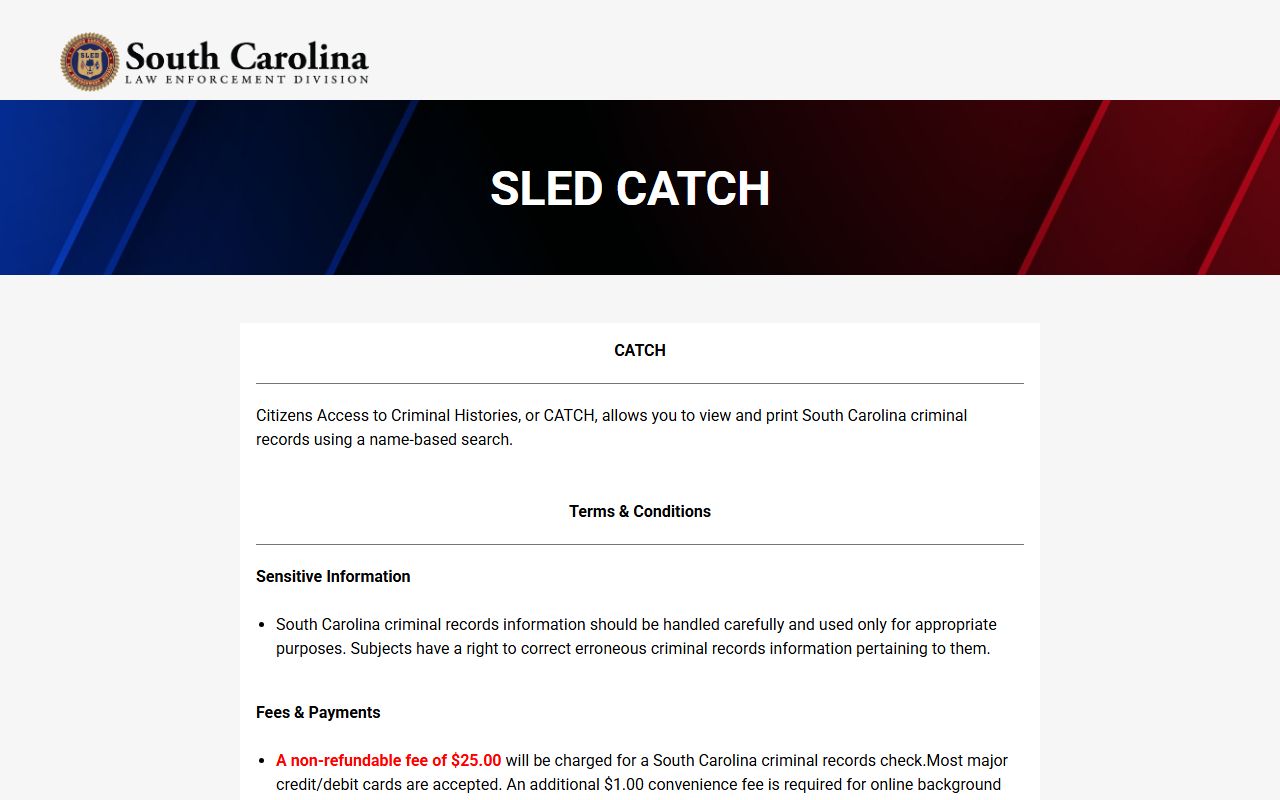
The CATCH portal walks users through the search submission process, payment, and results delivery for South Carolina criminal history lookups.
Note: CATCH results reflect records in the SLED database as of the date of search and may not capture very recent arrests or charges that have not yet been fully processed into the system.
South Carolina Court Records and Criminal Cases
The SC Judicial Branch case records search provides online access to court case information across the state. This is separate from the SLED database. Court records show case filings, charges, hearing dates, dispositions, and other docket information that SLED criminal history records may not include in full detail.
The Public Index is the primary online tool for searching South Carolina court records by name or case number. It covers General Sessions, Common Pleas, Family Court, and Magistrate-level cases depending on the county. Effective January 1, 2026, home addresses are no longer displayed through the Public Index as part of a privacy update. Other case details remain available to the public.
County clerks of court are the custodians of local criminal case files. The SC Judicial Branch maintains a clerk roster listing contact information for each county. The courthouse search directory is a useful companion tool for finding physical locations and hours.
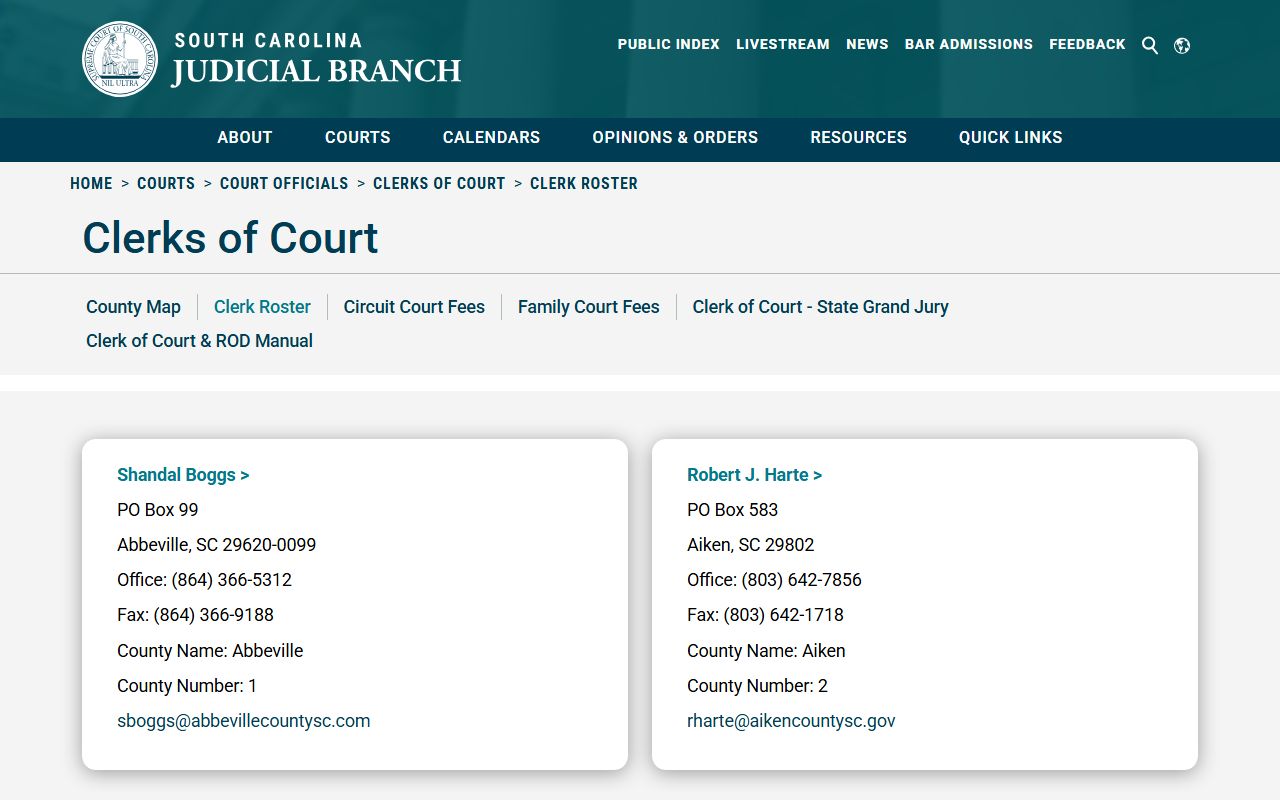
The SC clerk roster lists every county's clerk of court with contact details, making it easier to reach the right office for local criminal case records.
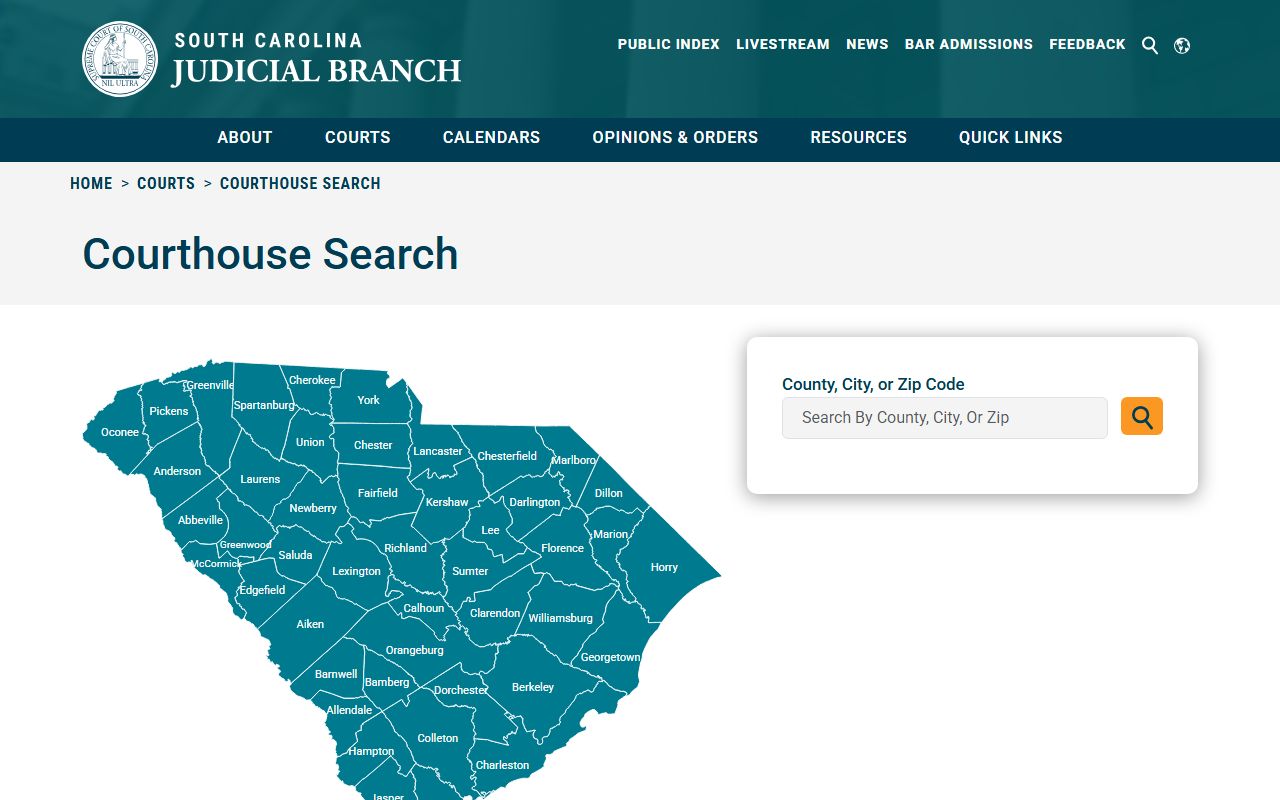
The courthouse search tool helps locate any South Carolina courthouse by county, circuit, or court type, which is useful for planning in-person records requests.
SC Department of Corrections Inmate Records
The South Carolina Department of Corrections inmate search covers individuals currently housed or previously incarcerated within the state prison system. Searches can be run by SCDC number, SID number, or name. The SC DOC can be reached by phone at 803-896-8531.
Inmate records are distinct from criminal history records. The DOC portal shows custody status, facility assignment, and sentence information for people within SCDC jurisdiction. It does not reflect arrests that did not result in incarceration or cases handled at the local jail level. When a broader picture is needed, SLED CATCH remains the proper starting point for a statewide criminal background check in South Carolina.
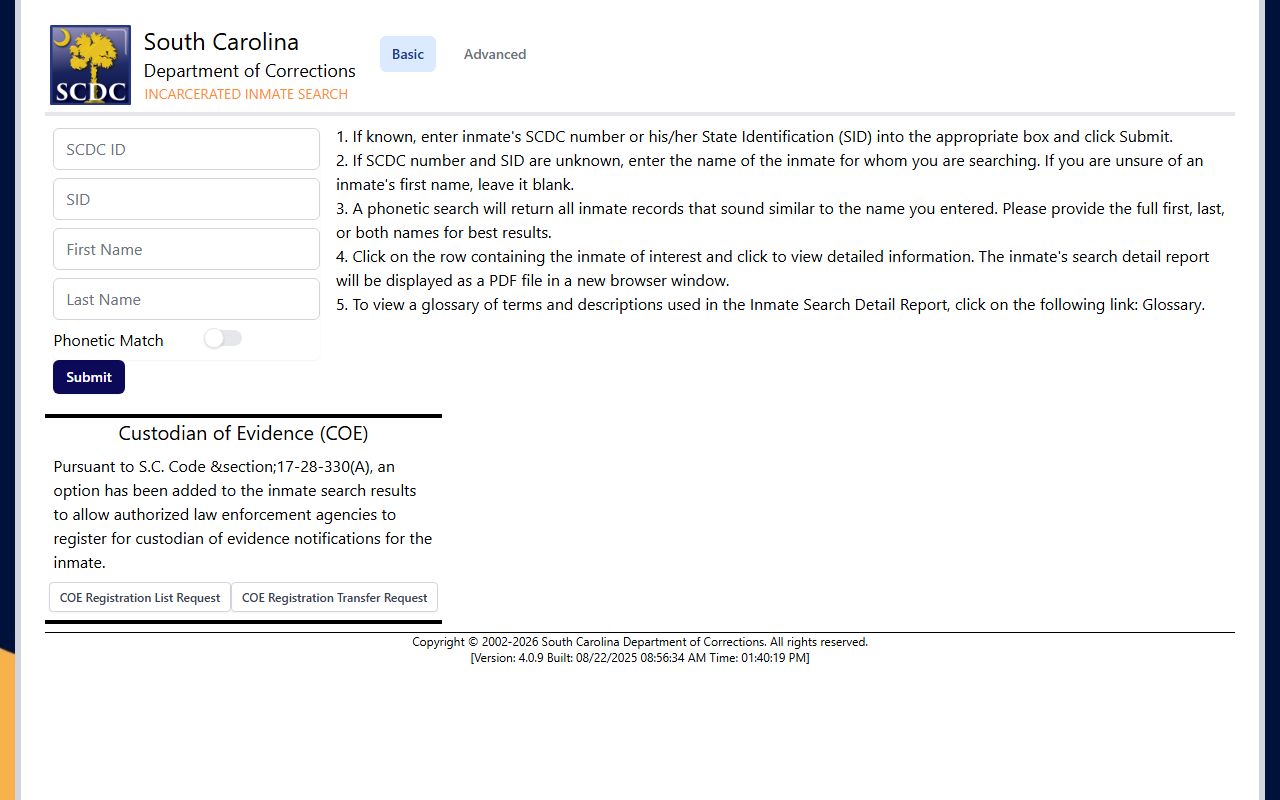
The SCDC public inmate search portal allows lookups by name or offender number to find current and past custody records for South Carolina state prisoners.
Sex Offender Registry in South Carolina
South Carolina maintains a public sex offender registry through the SLED-operated SORT system. Under Section 23-3-430 of the South Carolina Code, convicted sex offenders are required to register with their county sheriff. SLED maintains the statewide registry at PO Box 21398, Columbia, SC 29210, and the registry phone line is 803-896-2601.
SORT allows the public to search by name, county, or ZIP code. Registry entries include a photograph, current address, and details about the conviction that required registration. SLED updates the registry as offenders check in or update their information with their local sheriff's office.
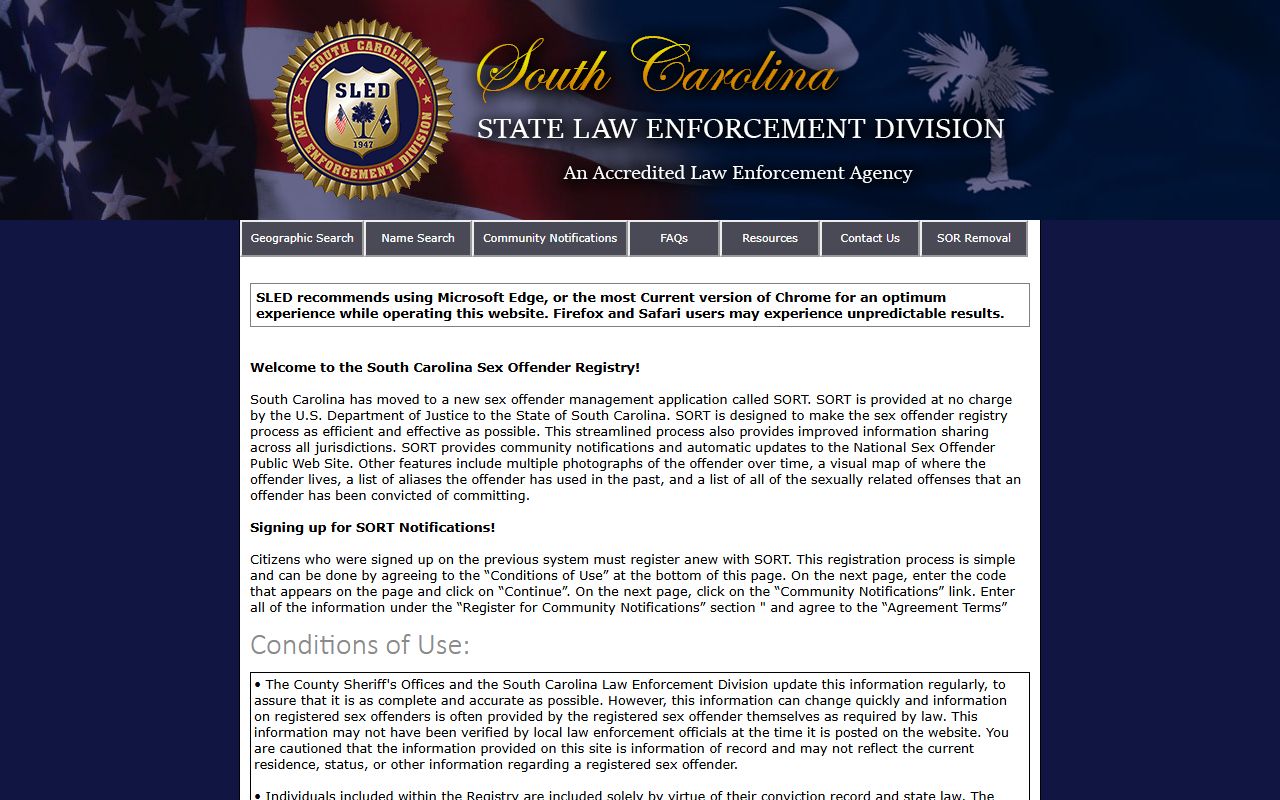
The SORT system homepage presents the terms of use before allowing searches of the South Carolina sex offender registry by name, address, or location.
South Carolina Criminal History Laws
Several statutes shape how South Carolina criminal history records are collected, stored, and shared. Title 23, Chapter 3 of the South Carolina Code covers the SLED records system, fingerprint submission requirements, and the fee structure for public record searches. These statutes establish the legal basis for SLED's role as a central criminal history repository.
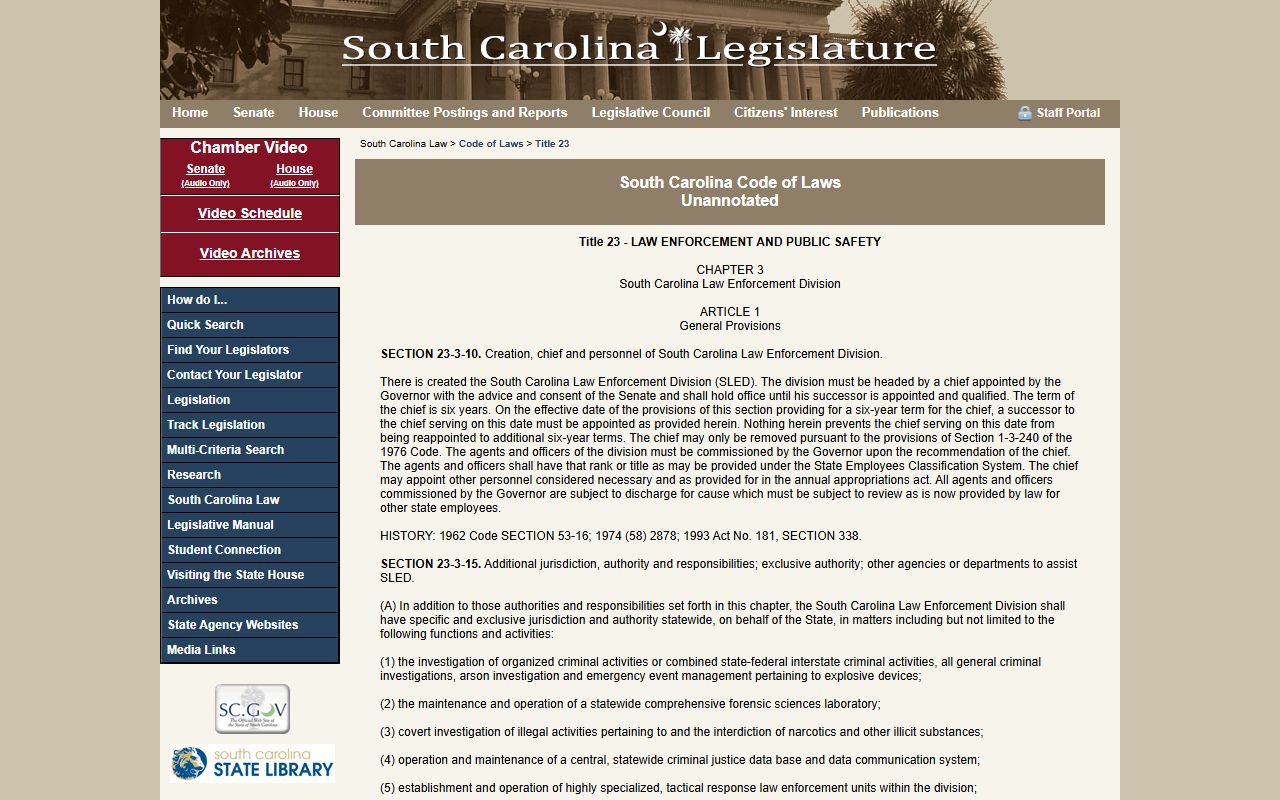
Title 23, Chapter 3 of the SC Code lays out the statutory framework for criminal records collection by SLED, including arrest reporting timelines and the authorized fee schedule.
The South Carolina Attorney General's office has issued opinions interpreting these statutes over the years. One notable opinion, AG Opinion 80-86, clarified that a pardon does not equal expungement in South Carolina. A pardon removes some civil penalties but does not erase the underlying criminal record from the SLED database or court files. The State Grand Jury Division within the AG's office handles complex criminal matters that cross county lines.
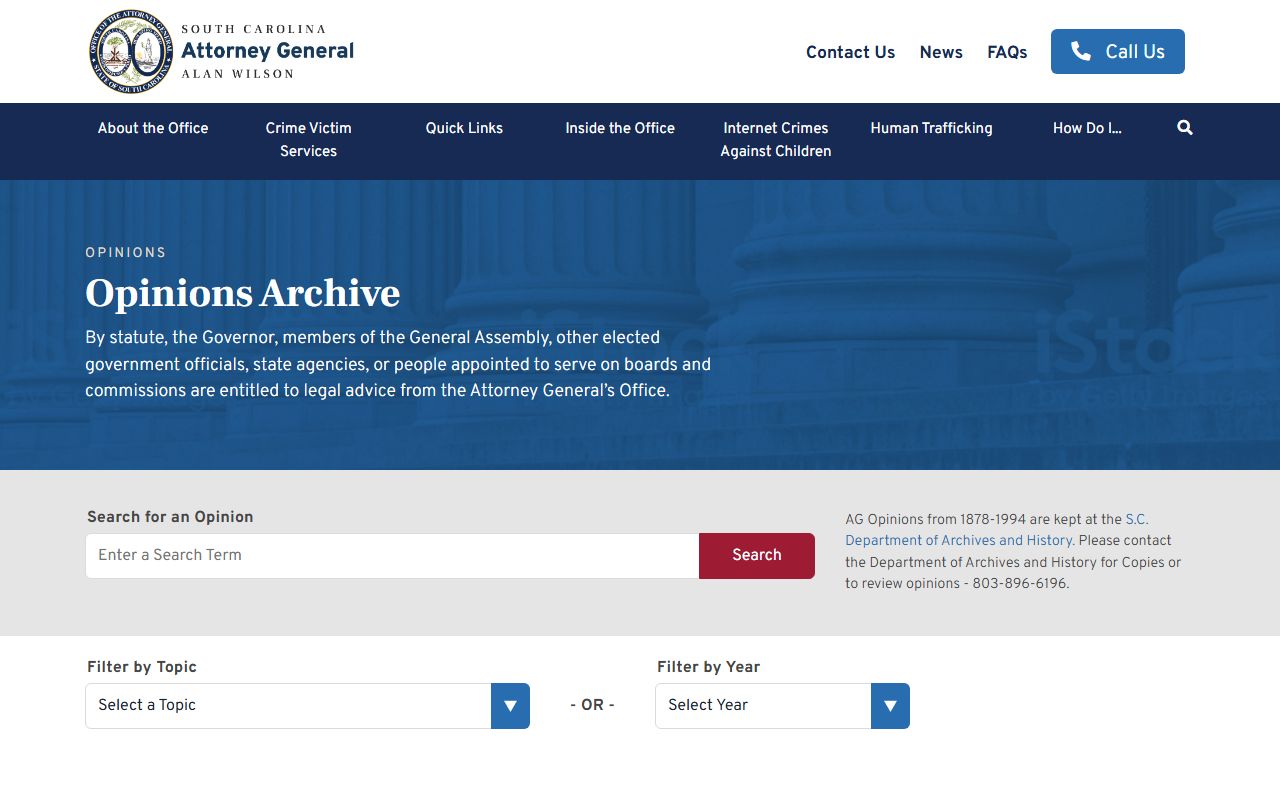
The AG opinions archive provides searchable access to formal legal opinions on a range of topics, including the limits of pardons and the scope of public access to criminal history data.
Note: A pardon issued by the state does not remove a criminal conviction from SLED records or the Public Index; only a court-ordered expungement accomplishes that under South Carolina law.
Expungement of Criminal Records in South Carolina
South Carolina provides a legal process for clearing certain criminal records from public access. Section 17-1-40 covers expungement for charges that were dismissed or entered a nolle prosequi. The filing fee for expungement under this statute is $250. Once an expungement order is granted by the court, the record is removed from the SLED database and should no longer appear in public searches.
Title 17, Chapter 1 of the South Carolina Code outlines eligibility for expungement, the petition process, and the effect of a granted order on criminal history records.
Section 17-22-150 provides a separate expungement path for individuals who complete the Pre-Trial Intervention Program. PTI completion can result in the charges being dismissed, which then opens the door to expungement. The South Carolina Department of Probation, Parole and Pardon Services plays a related role by handling pardon applications for those who cannot qualify for expungement. The DPPPS main line is 803-734-9220, with after-hours coverage at 800-263-7191.
The DPPPS website explains the pardon application process and the criteria the state uses to evaluate requests, which is separate from expungement under Title 17.
Freedom of Information Act and Criminal Records
South Carolina's open records law is codified at Section 30-4-30 of the South Carolina Code. Government agencies must respond to a FOIA request within 10 business days. The actual documents or records must then be furnished within 30 calendar days of the request. These timelines apply to state and local agencies that hold public records, including law enforcement agencies and court offices.
Title 30, Chapter 4 sets the legal framework for public records access in South Carolina, including the response deadlines that agencies must meet for FOIA requests.
Section 30-4-50 contains a specific provision that allows the public to obtain crime reports for a 14-day period without submitting a written FOIA request. This is useful for reviewing recent local incident reports without going through the full FOIA process. Most law enforcement agencies post daily or weekly incident logs on their websites, which satisfies this requirement informally.
FOIA requests for criminal history records at the individual level are handled differently than requests for aggregate crime data. A request for a specific person's full criminal history would go through SLED CATCH rather than a FOIA channel, since CATCH is the designated public dissemination system for individual South Carolina criminal background searches.
Criminal History Access Through County Courts
Each of South Carolina's 46 counties has a Clerk of Court who maintains case files for that jurisdiction. County-level criminal records include General Sessions cases, which handle felonies and serious misdemeanors, as well as Magistrate Court records covering lower-level offenses. The Public Index at publicindex.sccourts.org covers many of these county records online, though some older case files may require an in-person visit to the courthouse.
When online access is not sufficient, contacting the county clerk directly is the next step. The SC Judicial Branch maintains a complete clerk roster with contact details for every county. Most clerks will respond to written requests for certified copies of criminal case records, often for a per-page fee. Certified copies are useful when a specific document is needed rather than a general background check.
Circuit Solicitors prosecute General Sessions cases in each judicial circuit. South Carolina has 16 judicial circuits, each covering one or more counties. Contact information for solicitor offices can be useful when tracking down information about a case that has progressed through the prosecution stage.
Browse South Carolina Criminal History by County
South Carolina has 46 counties, each maintaining its own court records through a locally elected Clerk of Court. Select a county below to find criminal history resources specific to that jurisdiction.
Criminal History in Major South Carolina Cities
Criminal cases in South Carolina are filed at the county level regardless of which city the incident occurred in. The links below lead to city-specific criminal history resources covering the largest communities in the state.